Last updated November 17, 2026
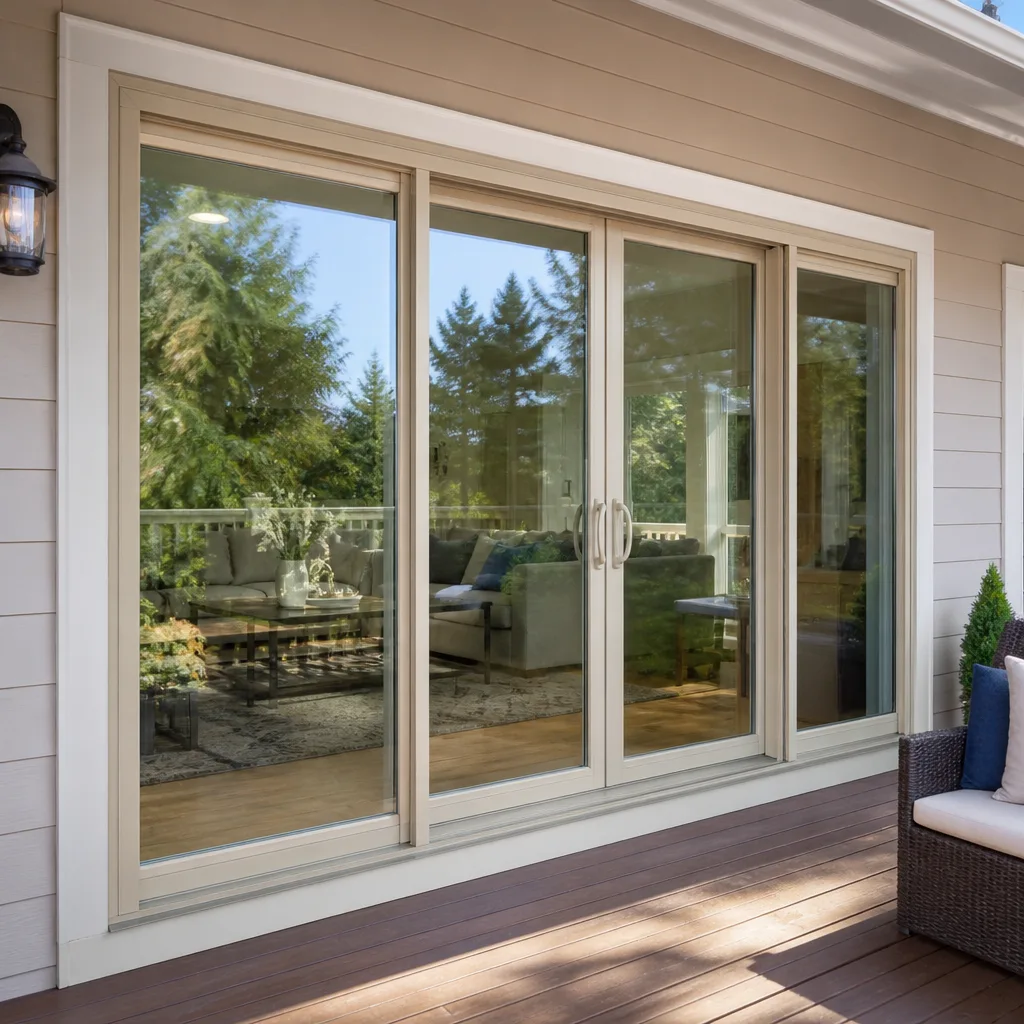 Sliding glass doors
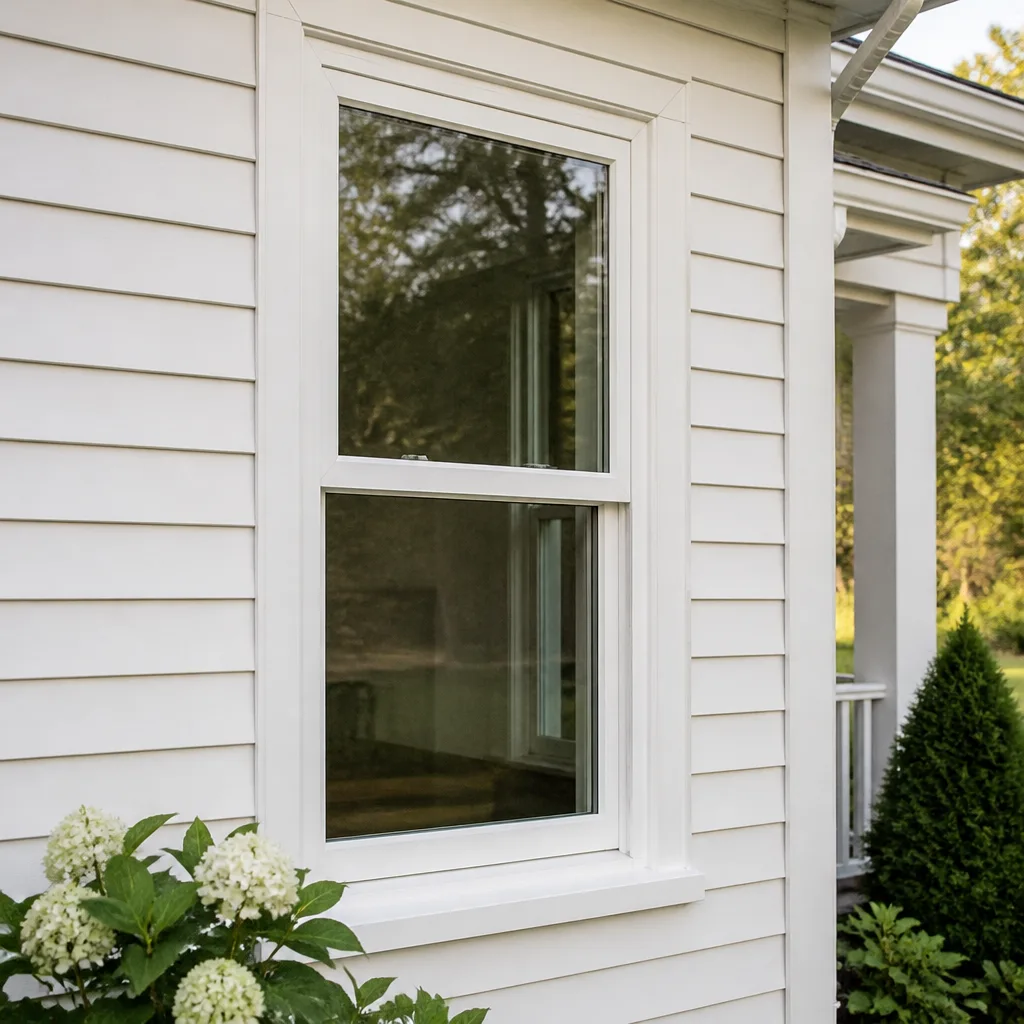 Single hung
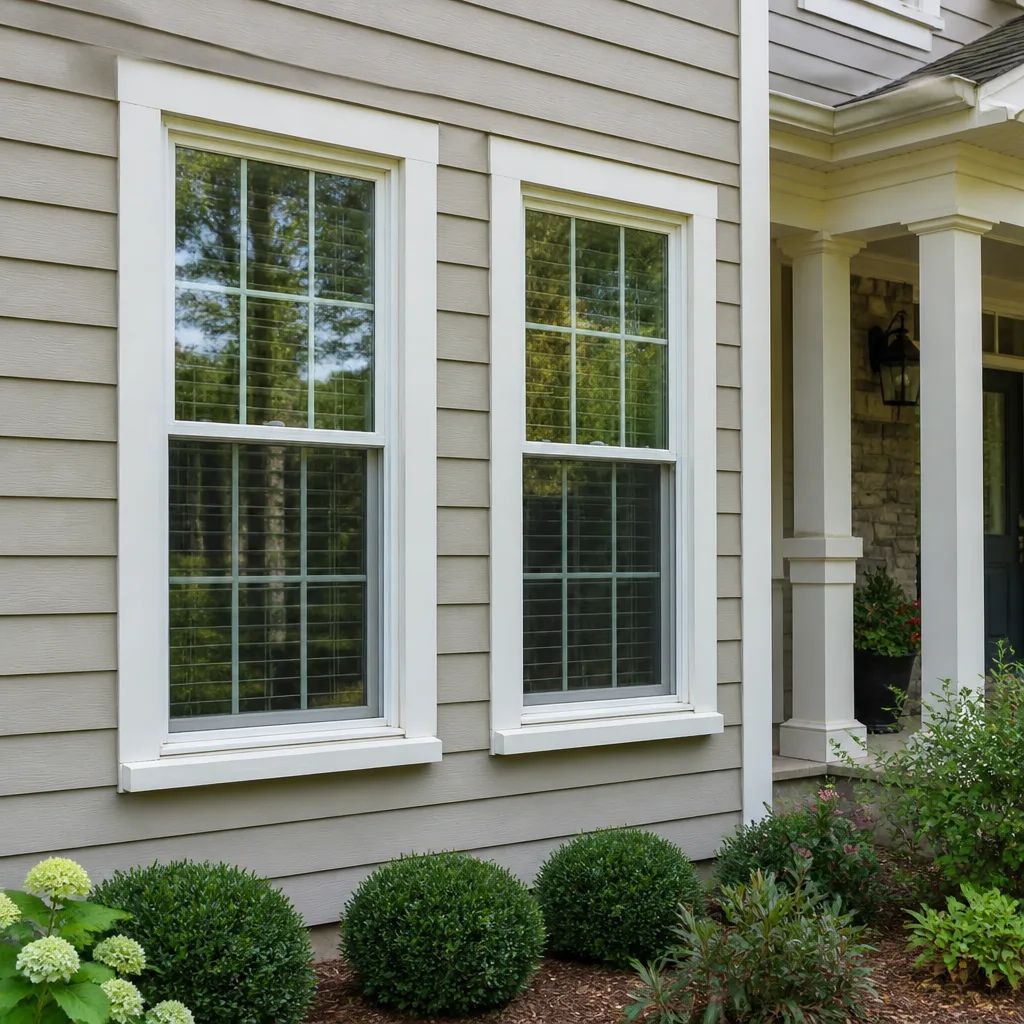 Double hung
 Horizontal roller
 Casement
 Bay & bow
 Entry doors
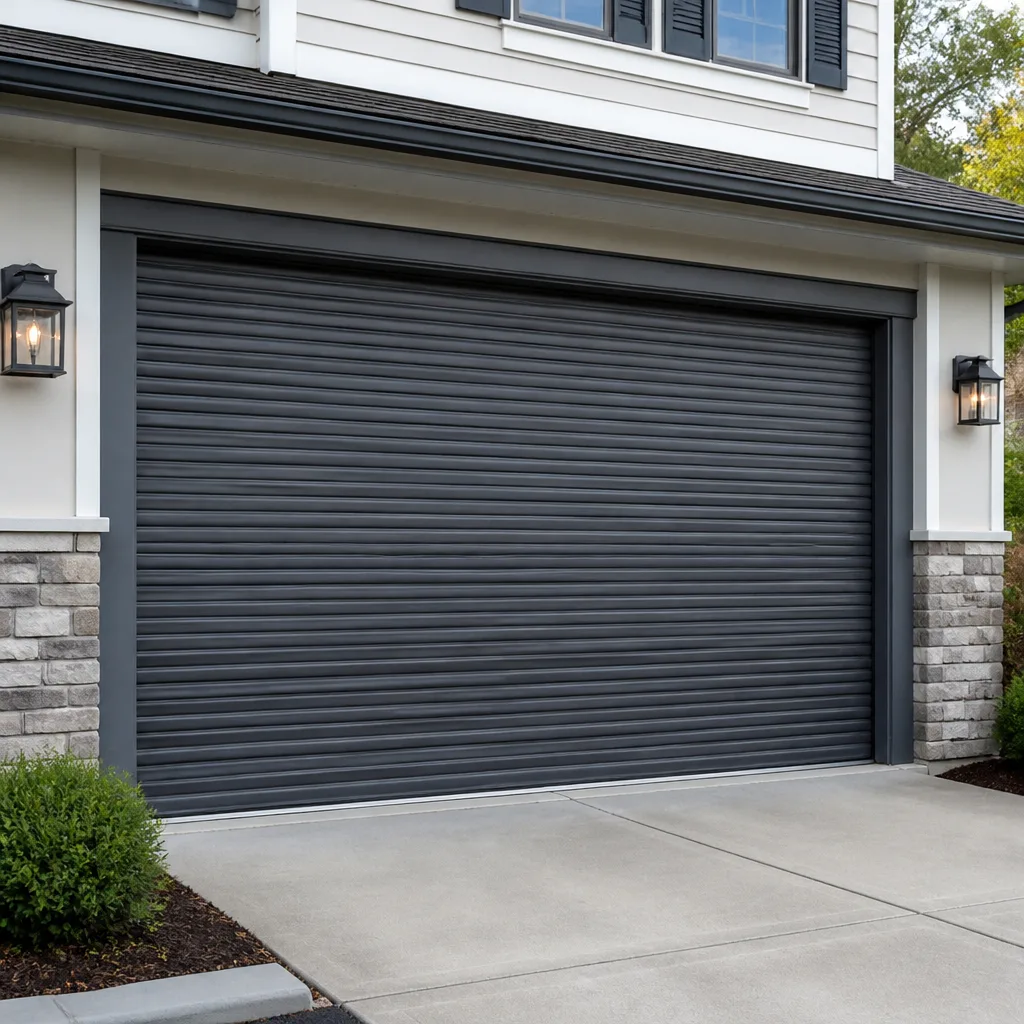
 Impact garage doors
 PGT
 CGI
Free in-home measure and quote - PGT, CGI and CWS impact lines compared on your actual openings, style by style
Get your free estimateDIY vs Professional Windows & Doors: The North Las Vegas Homeowner’s Decision Guide
Most window manufacturers void their product warranty if installation isn’t performed by a licensed contractor. That clause is buried in the warranty document, and it becomes very relevant the first time a seal fails, glass fogs, or a frame racks out of square, because the claim gets denied and the replacement cost lands on you. In North Las Vegas, where stucco walls, intense summer sun, and fast temperature swings stress an installation harder than a mild-climate tutorial ever accounts for, that buried clause matters more than in most places. This guide covers which parts of a window or door project a homeowner can genuinely handle, which parts carry real risk, and how to read a contractor bid so you know it accounts for how homes here are actually built.
Quick Answer
For most North Las Vegas homeowners, window and door replacement belongs in professional territory, not because you lack the skill to set a frame but because the work involves stucco integration, moisture flashing, and permit inspections that go wrong quietly under a finished wall. The genuinely DIY-appropriate tasks are the finish work: interior casing, trim, and screens. Everything that touches weatherproofing, structural anchoring, or the manufacturer’s warranty should be done by a licensed installer using a documented process.
Styles & brands we work with
- Single hung
- Double hung
- Horizontal roller
- Casement
- Bay & bow
- Sliding glass doors
- Entry doors
- Impact garage doors
- PGT
- CGI
Table of Contents
- Why the Warranty Clause Changes the Math
- Stucco: The North Las Vegas Installation Reality
- What Nevada’s Permit System Means for DIY
- The Tasks That Are Actually DIY-Appropriate
- The Tasks That Aren’t (and Why)
- How to Read a Contractor Quote Like You Know the Scope
- Why the Local Climate Raises the Stakes
- Matching Product to Project Before You Decide
Why the Warranty Clause Changes the Math
Window and door warranties are written by manufacturers, and on most mid-range and premium lines they include language requiring installation by a licensed professional according to the manufacturer’s written instructions. The product warranty covers defects in materials and manufacturing. The installation warranty covers labor and workmanship. When a homeowner installs the product themselves, the first warranty may survive on paper but the manufacturer can point to improper installation as the cause of the failure, and the second warranty doesn’t exist at all because there’s no installer to hold responsible.
This is where the climate in North Las Vegas amplifies the risk. Seals, gaskets, and insulated glass units work harder in a place with long stretches of extreme heat and wide day-to-night temperature swings than they do in a temperate climate. A unit that’s set slightly out of plumb, shimmed incorrectly, or flashed with the wrong detail may look fine for a season or two and then show fogging, water staining, or binding operation. When that happens on a self-installed product, the homeowner absorbs the full cost of replacement rather than filing a claim.
There’s a second layer most people don’t think about until resale: improper installation can void coverage that a future buyer’s inspector will flag. A window that leaks into a wall cavity and damages framing or drywall turns a finish problem into a structural one. We’ve seen how often the diagnosis points back to a detail that a licensed installer would have handled as routine.
Key point: the warranty question isn’t about whether the manufacturer “lets” you install your own windows. It’s about who pays when something fails. On a self-install, that’s you.
Stucco: The North Las Vegas Installation Reality
Stucco is the dominant exterior finish on homes across North Las Vegas, and that single fact moves most window and door replacement projects into professional territory regardless of how handy a homeowner is. Stucco isn’t a siding you can pop off and reattach. It’s a cement-based coating applied over a substrate, and cutting into it to remove a window means opening a wall assembly that has to be put back correctly.
A proper replacement in a stucco wall involves several steps that work together:
- Cutting back the stucco to expose the framing and the existing flashing around the rough opening.
- Removing the old unit without damaging the surrounding weather barrier.
- Installing a new moisture barrier and integrating it with the existing wall’s drainage plane.
- Setting the new window with proper flashing at the sill, jambs, and head so water sheds outward, not into the wall.
- Re-stuccoing around the new frame with a proper bond break and finish that matches the existing wall texture.
- Sealing any transition points so the finished wall is watertight before finish work begins.
Each of those steps has a right and a wrong way, and the wrong way often looks acceptable until the first hard monsoon rain or the first season of thermal cycling pushes water where it shouldn’t go. A window that leaks at the sill in a stucco wall doesn’t just drip inside the room. It can wick into the substrate and framing, and by the time the interior drywall shows staining, the damage is broader than the window itself.
This is also where product choice and installation expertise intersect. Brands like PGT and CGI build units designed for the kind of weather performance a desert home needs, but the best unit in the catalog still fails if the flashing detail behind the stucco is wrong. In our experience, the stucco integration is what separates a replacement that holds up from one that generates callbacks. When you’re comparing bids, ask specifically how the contractor handles the moisture barrier and the stucco tie-in. A bid that doesn’t address it is a bid that hasn’t thought it through.
What Nevada’s Permit System Means for DIY
Nevada does allow a homeowner to pull what’s often called an owner-builder permit for work on their own residence, which means a determined DIYer can legally replace a window or door in North Las Vegas with the right paperwork. But the permit isn’t a formality, and it comes with obligations that catch people off guard.
Homeowner-issued permits typically carry inspection requirements. That means a municipal inspector will look at the work at defined stages, and if the installation doesn’t meet code or manufacturer specs, the inspector can fail it, require correction, and in some cases require removal. The inspection exists to protect the structure and the future occupant, and it doesn’t soften because the work was done by the person who lives there.
The resale piece is the part most homeowners don’t hear about until it’s a problem. When you sell a home, permit history is typically disclosed, and an unpermitted or improperly permitted improvement can complicate the transaction, slow closing, or require retroactive correction. A buyer’s agent will ask. An inspector will look. And a window or door that was installed under an owner-builder permit with a failed or missing final inspection is exactly the kind of detail that turns into a negotiation at the worst possible time.
None of this is a reason to panic about permits. It’s a reason to treat the permit process as part of the project scope rather than an afterthought, and to weigh whether the time, inspection coordination, and disclosure obligations are worth taking on yourself. Ask your city’s building department what a window replacement in your home actually requires before you decide. The answer varies by scope and by how the work is classified.
The Tasks That Are Actually DIY-Appropriate
A surprising amount of a window and door project is finish work, and finish work is where a homeowner with patience and the right tools can genuinely save money without taking on structural or warranty risk. The key is drawing a clear line between the weather envelope and the visual finish.
Genuinely DIY-appropriate:
- Interior casing and trim. Installing or replacing the trim around a newly set window is a carpentry and finish task. It affects appearance, not weatherproofing.
- Caulking and painting interior trim. Cosmetic, low-risk, and easy to redo if it doesn’t come out clean on the first pass.
- Screen installation and replacement. Swapping insect screens into a finished frame is straightforward and doesn’t touch the sealed assembly.
- Interior window treatments and hardware. Blinds, shades, and aftermarket locks that don’t involve the frame integrity are homeowner territory.
- Touch-up painting around the finished opening. Once the installer has handed off a sealed, inspected window, painting the surrounding drywall or trim is safe to take on.
What these have in common is that none of them compromise the unit’s weather resistance, its structural attachment, or the manufacturer’s installation warranty. If a leak develops, none of these tasks is a plausible cause, which means the warranty conversation stays clean.
We sometimes hear from homeowners who want to handle the trim themselves and let the installer focus on the unit. That’s a reasonable split, and it’s worth raising with your contractor during the bid so the scope is clear on paper. Just be honest about which part you’re keeping, because scheduling and sequencing depend on it.
The Tasks That Aren’t (and Why)
The tasks that belong to a professional installer are the ones where a subtle error does real damage. High on that list is anything involving the wall cavity, the weather barrier, the structural anchoring, or the seal of the unit itself. These aren’t harder than finish work in a way that more practice solves. They’re different in kind, because the failure mode is hidden and expensive.
Should be handled by a licensed professional:
- Removal of the existing unit. Cutting out a window without damaging the surrounding wall assembly, the moisture barrier, or the structural framing takes technique and knowing what’s behind the finish.
- Flashing and moisture barrier integration. This is the single highest-risk detail. Get it wrong and water reaches the framing.
- Setting and shimming the new unit. Windows have to sit plumb, level, and square, with the correct shim placement so the frame doesn’t distort and bind the operating hardware.
- Structural anchoring to the rough opening. Fastener type, placement, and spacing follow the manufacturer’s instructions and local code; wrong anchoring can compromise both.
- Re-stucco and exterior finish. Matching texture and applying a proper bond break around the new frame is finish work that has to perform as weather barrier too.
- Final sealing and inspection-ready handoff. The exterior seal and the permit stage work that gets the job signed off.
Door installation deserves a note because entry doors carry a different set of demands. A door has to hang true, swing freely for its full arc, and seal tight enough at the threshold, jamb, and head to resist air and water intrusion. Brands like Therma-Tru build door systems with specific installation requirements, and a beautiful door hung slightly off pulls away from its weatherstripping and lets water in at the threshold. There’s a reason door installation specialists exist. The margin between a good door install and a leaky one is smaller than it looks.
Here’s the honest framing: a homeowner who installs a window in a stucco wall in a harsh climate is taking on a warranty problem, a permit problem, and a wall cavity problem all at once. Each one is survivable alone. Together, they’re the reason we recommend a professional for the envelope work on nearly every replacement in North Las Vegas.
How to Read a Contractor Quote Like You Know the Scope
A contractor bid is only useful if you can tell whether it accounts for how your home is actually built. In North Las Vegas, that means the quote has to address stucco integration and permit handling, not just window unit cost and labor hours. A bid that quotes a single number with no line items is a bid you can’t evaluate.
Use this as a checklist when comparing quotes:
- Does it name the window line and the model number? A bid that specifies Therma-Tru doors or a PGT window line tells you the product is real. A generic “replacement window” leaves the actual unit to the installer’s discretion.
- Does it describe the stucco scope? Look for language about cutting back stucco, flashing, moisture barrier integration, and re-stucco. If rebuilding the finish isn’t mentioned, the bid isn’t complete.
- Does it state who pulls the permit? The bid should say clearly whether the contractor pulls it or whether it’s the homeowner’s job. On a professional job, the contractor pulls it.
- Does it address inspection? A serious bid anticipates the inspection stages and knows what the inspector will look for.
- Does it list what the unit price includes? Removal of the old unit, disposal, the flash and barrier work, finish hardware, and the trim scope should be broken out or described.
- Does it offer more than one product tier? A specialist who carries multiple brands can present options rather than one line. Eight manufacturer lines mean a genuine choice between impact-rated, energy-focused, and premium aesthetic tiers.
- Does the payment schedule and timeline fit the scope? Look for a schedule that reflects the actual job, not a one-line lump sum.
The most useful signal is whether the contractor’s bid shows they understand North Las Vegas installation requirements from the inside. A quote that talks about stucco integration, moisture barriers, and permit inspection stages reads differently from one that lists square footage and a per-window price. You’re not trying to catch anyone out. You’re trying to see whether the person bidding on your home has done this job in a stucco-clad neighborhood before.
If you’re comparing bids on a broader project, our guide to window replacement walks through the full scope of what a replacement typically involves. The quote checklist above applies whether you’re replacing one unit or all of them.
Why the Local Climate Raises the Stakes
North Las Vegas sits in a desert valley, and that shapes what a window and door installation has to withstand. Summers bring sustained high heat and intense sun exposure on west and south-facing glass. Overnight, temperatures drop sharply, and that daily swing works on seals, gaskets, and glazing compounds over time. The thermal cycling is the quiet stress that exposes a poorly set or improperly sealed unit.
Winter and the monsoon season add a different kind of stress with wind-driven rain. Rain that gets past the exterior seal at a sill or head detail can travel into the wall cavity behind the stucco, and once it’s in, it’s a moisture problem rather than a window problem. Desert homes don’t have the same forgiving drying conditions as cooler climates, and a small leak that would evaporate somewhere else can sit against framing and substrate here.
This is why installation details that seem marginal in a YouTube tutorial matter more here than the tutorial accounts for. A tutorial filmed in a temperate climate won’t mention thermal cycling, wind-driven rain at the sill, or how a stucco wall behaves after a monsoon. It also won’t warn about the warranty clause, because it assumes you’re working in a jurisdiction and a wall assembly where the manufacturer’s installer requirement is a non-issue.
The practical point is that the local climate makes installation errors more likely to show up and more expensive once they do. That’s the argument for professional installation in North Las Vegas. Not that a homeowner can’t set a frame. That the environment punishes small mistakes harder than the average tutorial anticipates.
Matching Product to Project Before You Decide
The DIY-versus-professional decision doesn’t happen in a vacuum. It’s entangled with a prior question: which product is actually right for the home? A homeowner who hasn’t settled that question is often buying whatever a single-brochure dealer puts in front of them. A specialist who carries multiple manufacturer lines can match the product to the priority, whether that’s impact resilience, energy performance, or a premium aesthetic in an entry door.
That range matters because homes in North Las Vegas come with different priorities. Some owners are focused on storm and impact resilience, and lines like PGT and CGI are built for those applications. Others are focused on energy performance through hot summers, where energy-focused lines like ECO Window Systems and ES Windows make the most sense. And a homeowner replacing an entry door has a whole different set of considerations, where a recognized brand like Therma-Tru carries real weight for durability and a finished look.
When your product is matched to your actual priority, the installation becomes a more straightforward job for whoever does it. The installer isn’t compensating for the wrong unit, and the warranty isn’t complicated by a product installed outside its intended application. If you’re still sorting out what window or door you need, our page on window installation explains the difference between a fresh installation and a replacement. It’s worth reading before you decide whether to take any of the project on yourself.
Common Mistakes to Avoid
- Assuming the warranty covers a self-install. It usually doesn’t cover installation-related failures, and the manufacturer can deny a claim when installation wasn’t performed by a licensed contractor. Read the warranty document before you decide to install your own windows.
- Treating stucco like siding. Stucco walls require flashing and moisture barrier integration that a siding-minded tutorial won’t teach. Cutting into stucco without a plan for rebuilding the weather envelope is how leaks start.
- Pulling an owner-builder permit without understanding the inspection and disclosure obligations. The permit is legal to pull, but it comes with inspections and a resale paper trail. Know what you’re signing up for before you file.
- Buying the cheapest unit without thinking about the priority. A window that’s wrong for the home’s main concern wastes the install effort. Match impact, energy, or premium aesthetic to what the home actually needs.
- Hiring a generalist who “also does windows” instead of a specialist. Windows and doors have their own install details, and in a stucco climate those details matter. A specialist does this one job every day.
- Comparing quotes by total price only. A lower number that omits stucco re-finish, permit handling, or disposal isn’t a lower price. It’s a smaller scope that becomes a change order later.
- Handling the interior finish yourself without telling the contractor. If you’re keeping the trim work, say so during the bid so the sequence is planned. A surprise scope split causes scheduling problems.
See the difference
 Before
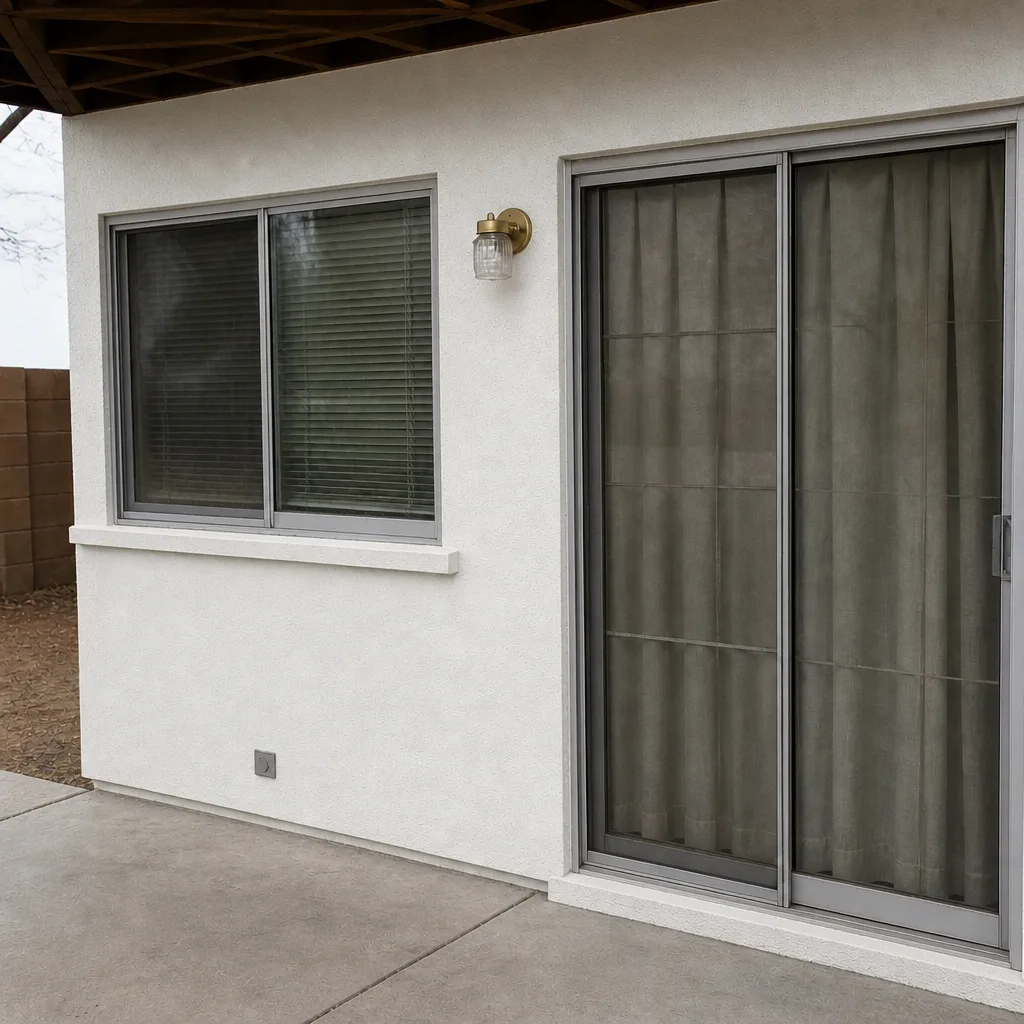 After
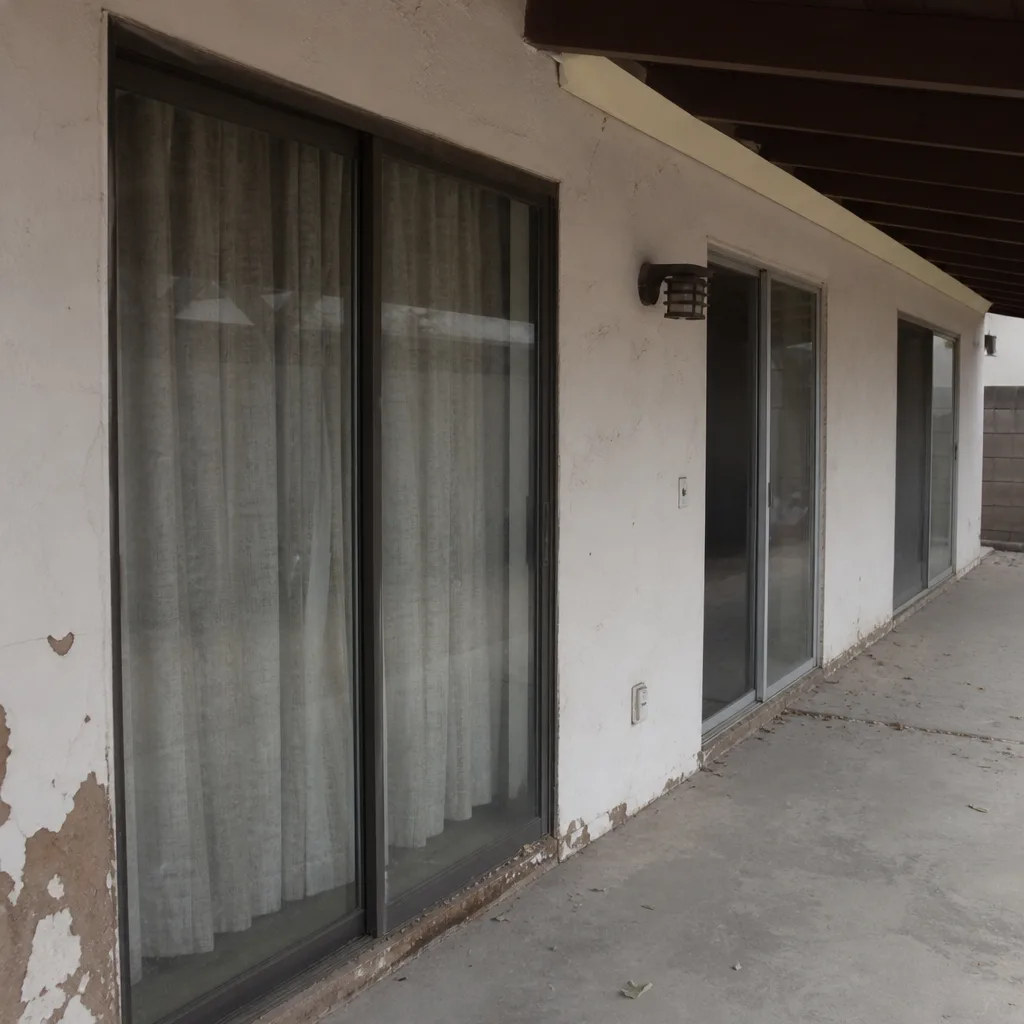 Before
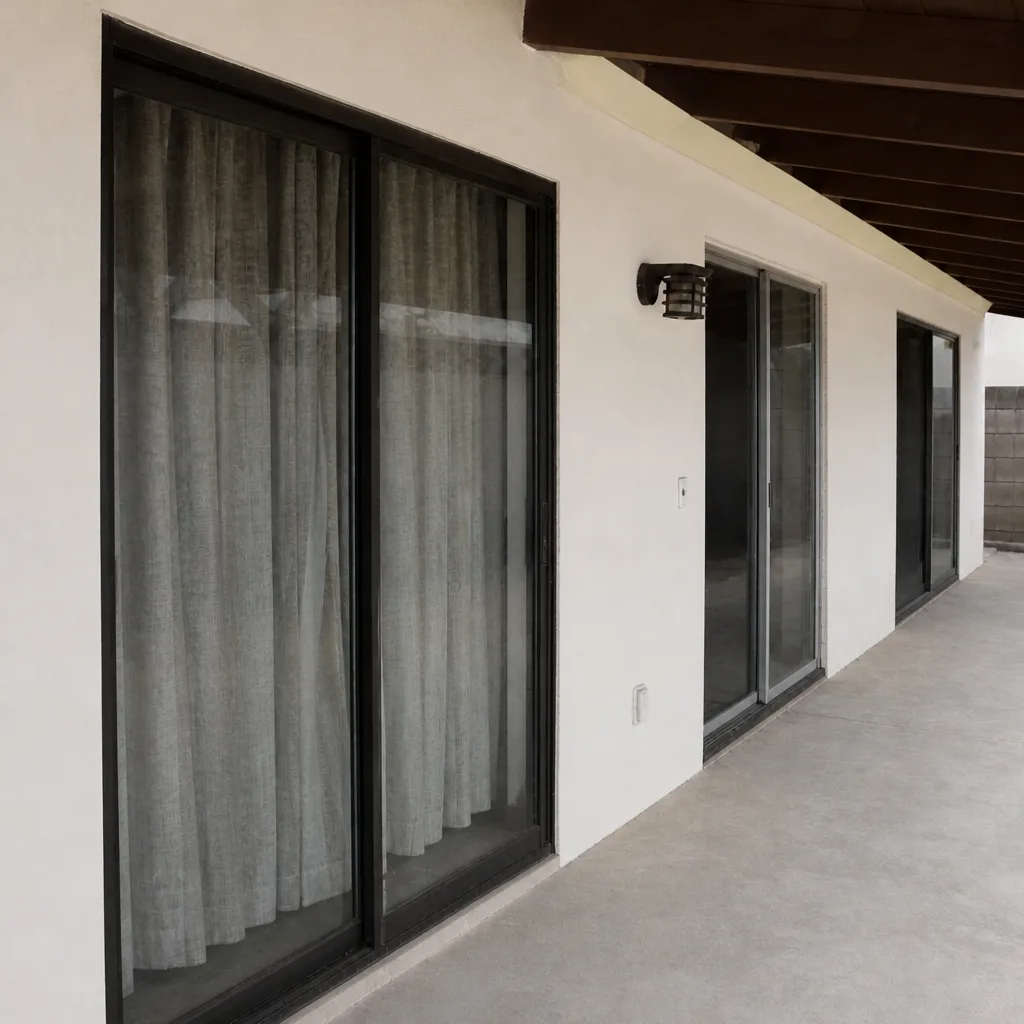 After
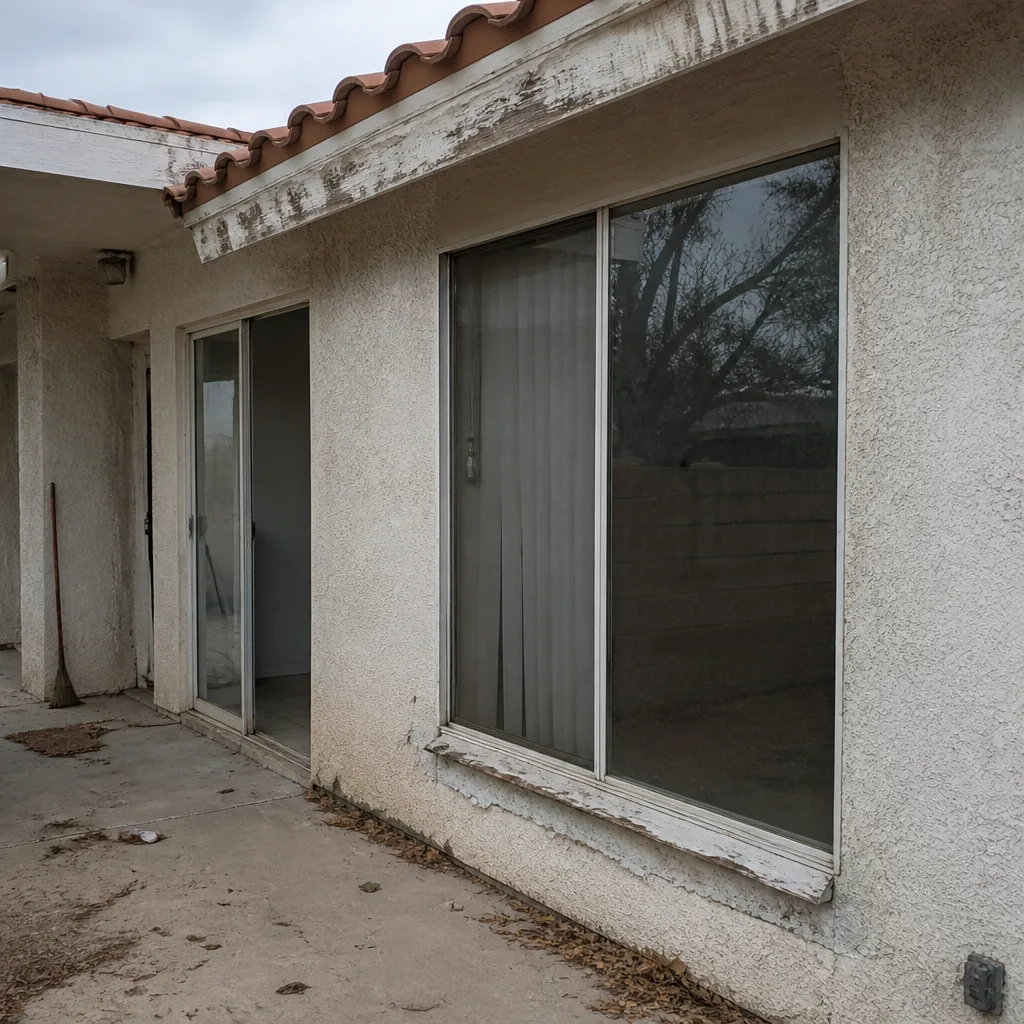 Before
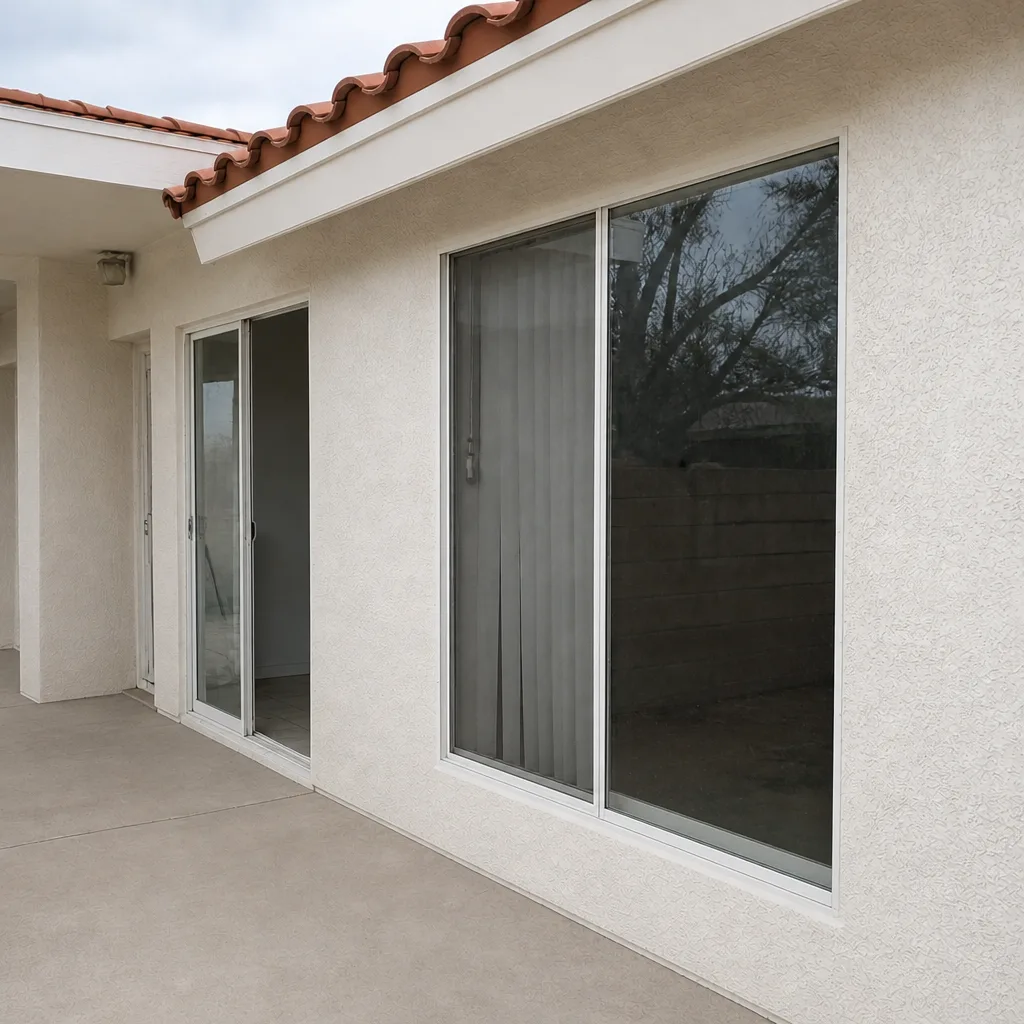 After
When to Call a Professional
Call a professional when the project involves stucco, a structural opening, a permit, or a product you need to keep under warranty. In practice, that covers nearly every window and door replacement in North Las Vegas, because the wall assembly itself makes the job professional territory regardless of skill. Call a specialist when the unit is impact-rated or energy-focused, when the scope includes permit and inspection stages, or when the entry door replacement needs to hang true and seal at the threshold.
Call too if you’re mid-comparison and can’t tell whether a bid accounts for the stucco integration. A second opinion on scope is worth the conversation. North Las Vegas Windows & Doors offers free estimates in North Las Vegas. We carry eight manufacturer lines across impact, energy-efficient, and premium aesthetic product lines, and our technicians have up to 14 years of experience with the installation details this climate demands. Call (844) 560-4723 to schedule your free estimate. We answer 24/7, with fast dispatch from 7am to 7pm, Sunday through Friday.
Frequently Asked Questions
Yes, most mid-range and premium window and door brands void installation-related warranty coverage unless a licensed contractor performs the install. The product warranty may survive on paper, but if a failure traces back to installation, the manufacturer can deny the claim. In a climate where thermal cycling stresses seals harder, that risk is more likely to bite. Call (844) 560-4723 for a free estimate with a licensed installer.
Nevada allows homeowner-owner-builder permits for work on your own residence, so it’s legal to pull one. The catch is that the permit carries inspection requirements and is typically disclosed at resale, and a failed or missing final inspection can complicate a future sale. Confirm what your city’s building department requires before filing. For a professional job that handles the permit for you, call (844) 560-4723.
Stucco is the dominant exterior finish on North Las Vegas homes, and replacing a window in a stucco wall means cutting back the stucco, rebuilding the moisture barrier, flashing the opening, and re-stuccoing with a proper bond break and texture match. Get any of that wrong and water can reach the wall cavity, where the damage is hidden until the interior shows staining. A licensed installer with stucco experience handles this as part of the scope. Estimates are free – call (844) 560-4723.
Interior casing, trim, caulking, painting, screen installation, and window treatments are genuinely DIY-appropriate because they don’t touch the weather envelope or the structural installation. Removal of the old unit, flashing, moisture barrier integration, anchoring, and re-stucco should go to a professional. Splitting the work this way is reasonable if you tell the contractor during the bid. To talk through the scope, call (844) 560-4723.
A written line-item quote sets the price, which is why we don’t quote from a lump sum. Get a bid that breaks out the window or door line and model, the stucco scope, the permit, the disposal, and the trim, and that becomes the basis for the final price. If a bidder won’t provide line items, that’s a warning sign. For a written quote on your North Las Vegas project, call (844) 560-4723.
Neither is universally better; it depends on your home’s priority. If storm and impact resilience is the priority, impact-rated lines like PGT and CGI are the right fit. If energy performance through hot summers is the priority, energy-focused lines like ECO Window Systems and ES Windows make more sense. A specialist who carries both can match the product to the home rather than fit the home to one catalog. Call (844) 560-4723 for a free estimate.
The Bottom Line
The DIY-versus-professional question for windows and doors in North Las Vegas usually resolves to professional, and not because homeowners lack skill. It resolves that way because the warranty clause, the stucco wall assembly, and the permit inspection system each carry risk a homeowner isn’t positioned to absorb. The finish work – trim, casing, screens, paint – is yours to take on if you want it. The envelope work is the line to draw. Read your warranty, ask your building department what a replacement requires, and get written line-item quotes that address stucco integration. Then compare on scope, not just on the total.
When you’re ready to see what a licensed installation looks like on your home, North Las Vegas Windows & Doors specializes in North Las Vegas window and door work and offers free estimates. Call (844) 560-4723. We answer 24/7, with fast dispatch from 7am to 7pm, Sunday through Friday.
Written by the team at North Las Vegas Windows & Doors.